
Search Arkansas Probate Court Records
Arkansas Probate Court Records are filed with the Circuit Court in the county where the decedent lived or owned land. The County Clerk is clerk to the probate court and keeps the case file for each estate, will, guardianship, and conservatorship matter. You can search Arkansas Probate Court Records online, walk into the County Clerk's office, or mail a written request. This page shows you how to find the right court, what a probate file holds, and how to get a plain or certified copy of any record you need.
Arkansas Probate Court Records Overview
Arkansas Probate Court Records Explained
Probate is the process of moving money and property to heirs after a person dies. Arkansas Circuit Courts hear all probate matters under Arkansas Code § 28-1-104. This covers the probate of wills, the administration of estates, guardianships for minors and adults, name changes, and adoption cases. District and municipal courts do not hear probate cases. They handle traffic, small claims, and misdemeanors only.
The County Clerk in each Arkansas county serves as the clerk to the probate court. Under Arkansas Code § 28-1-106, the clerk files all estate papers, keeps the docket, swears in witnesses in contested cases, and issues notices to heirs and creditors. The Circuit Clerk may also hold probate files in some counties where the two offices share staff. Call the county office before you go, so you know where the file is held.
Arkansas Probate Court Records go back to each county's formation. Some records date to the 1810s or 1820s. Many older papers have been microfilmed and are now online through FamilySearch and the Arkansas State Archives. Modern files are in the Contexte case management system and can be searched on CourtConnect. A few counties lost records to fire over the years, and in those places the index may start at a later date.
The Arkansas Judiciary runs the statewide case search tools. Visit the main site at arcourts.gov for court rules, forms, and links to each circuit. You will find the probate division page with helpful guides for personal representatives, guardians, and heirs who need to file or pull papers from a case.
The Arkansas Judiciary's public website hosts court rules, forms, and contacts for every circuit in the state, and you can see a snapshot of the main portal below.

This page is the front door to court rules, self-help forms, and judicial directory listings used for probate and estate work across Arkansas.
Where to Find Arkansas Probate Court Records
Arkansas Probate Court Records live at the courthouse in the county where the case was filed. The County Clerk and the Circuit Clerk handle the file. Call first. Ask which office holds the case. Some counties split the work and the papers you want may be in a different office than you expect.
You do not need to be a party to ask for the file. Probate cases are public under Arkansas Code § 28-1-108 and Administrative Order No. 19, which sets statewide rules for access to court records. Give the clerk the case number or the name of the deceased. Staff will pull the file and make copies.
Note: The County Clerk is the main keeper of probate case files in Arkansas, but some counties also route wills and estate papers through the Circuit Clerk's office.
Some papers in a case file have limited access. Social security numbers, medical reports, and records that name a minor may be sealed or redacted. The court can seal the full case on request if good cause is shown, but this is rare. For most estate files, you can walk in, ask for the case, and leave with the copies that same day.
Arkansas Probate Court Records Online
The state runs a free public case search called CourtConnect. You can search Arkansas Probate Court Records online by party name, case number, or case type. The portal shows case status, hearing dates, and the list of docket entries filed in the case.
The portal is hosted at caseinfo.arcourts.gov and is open to the public. You can browse the main index below to see what the search page looks like before you start.
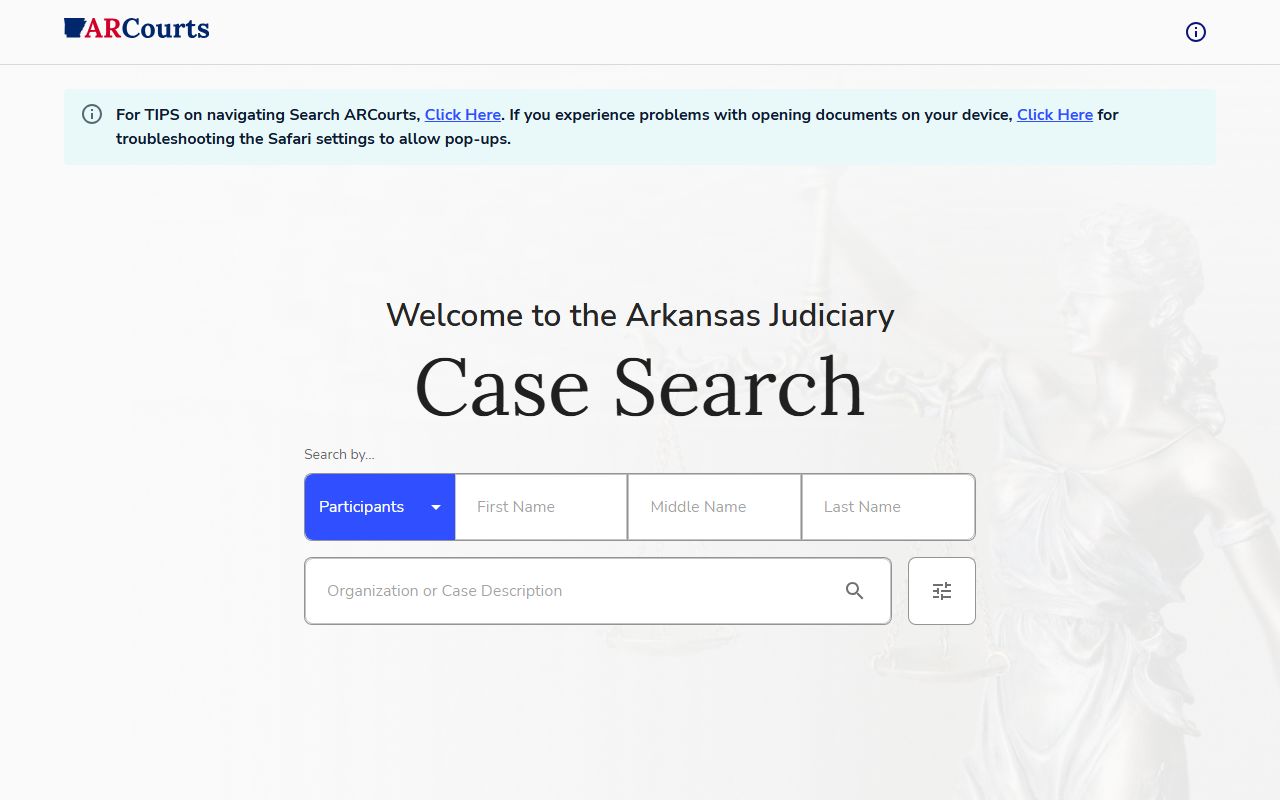
The main index page lets you pick the search type and the court you want to query. Most counties feed live data into this system.
To run a search:
- Pick the court type (circuit, district, or both)
- Enter a full name, case number, or business name
- Choose a date range to narrow the list
- Click search and open the case summary
Full case information is on display for most counties, though a handful are listed as partial data only. The court portal landing page lays out which counties post full records and which are partial. CourtConnect is also where you find docket dates for estate hearings and guardianship review dates.
You can take a quick look at the Arkansas Courts portal below to get a sense of the layout.
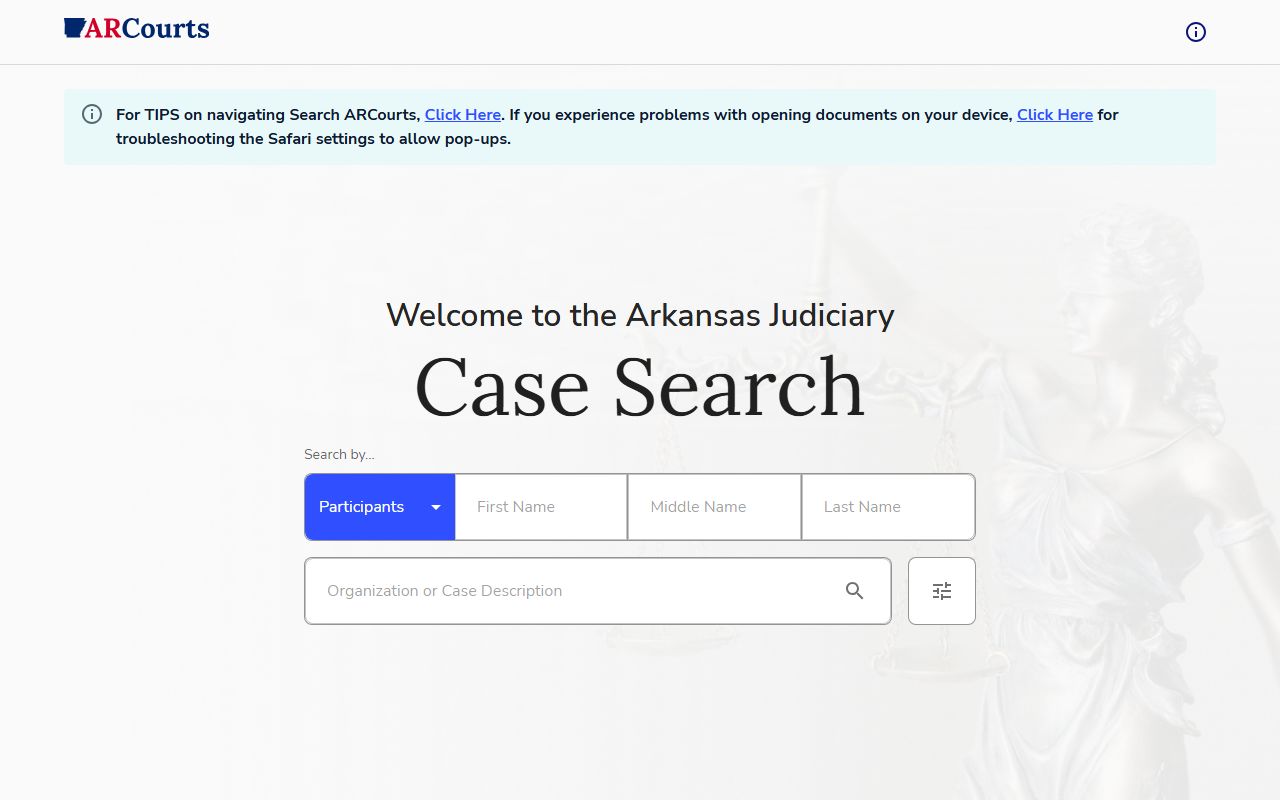
From this page you can jump to case search, court forms, and the judicial directory for each county in Arkansas.
Tip: The portal shows case entries and party names but does not always show the full will or inventory; for the paper file, visit the County Clerk in person.
Types of Arkansas Probate Court Records
Probate covers more than wills. Arkansas Probate Court Records hold several kinds of cases. Each case has its own file with papers from start to close.
The most common file types include:
- Estate administration with a will (testate)
- Estate administration without a will (intestate)
- Small estate affidavits
- Guardianships for minors
- Guardianships and conservatorships for adults
- Adoption cases (sealed)
- Name change petitions
An estate case starts when someone files a petition under Arkansas Code § 28-40-107. The petition lists the decedent, the known heirs, and the rough value of the estate. If there is a will, the court holds a proof hearing under Arkansas Code § 28-40-117 with at least two attesting witnesses. The court then admits the will and names a personal representative to take charge of the estate.
The personal representative must file an inventory within 60 days of appointment. This rule comes from Arkansas Code § 28-48-101. The inventory lists all property owned at death, from bank accounts to land. Creditors get notice and must file claims within six months of first publication under Arkansas Code § 28-40-111. The court settles debts, sells property if needed, and then orders a final distribution to the heirs. The personal representative files a final account under Arkansas Code § 28-52-101 to close the case.
Intestate cases follow the same path, but the court applies the rules in Arkansas Code § 28-9-203 to decide who inherits. A surviving spouse and minor children also get a family allowance and a homestead allowance under Arkansas Code § 28-39-101. These rights come off the top before the rest of the estate passes to heirs.
Guardianship files hold medical statements, reports from the guardian ad litem, and annual reports to the court. See Arkansas Code § 28-65-101 for the rules on appointment and Arkansas Code § 28-65-207 for the 20-day notice that must run before a guardianship hearing. Conservatorship files work the same way. Adoption files are sealed by law and not open to the public.
Small Estate Procedure in Arkansas
Arkansas has a short-form option for estates worth $100,000 or less. The value does not count the homestead or statutory allowances. This track uses an affidavit instead of a full probate case. It saves time and cost.
The rule is set by Arkansas Code § 28-41-101. You wait at least 45 days after the death. You file an Affidavit for Collection of Small Estate by Distributee with the Circuit Clerk or County Clerk in the right county. The filing fee is around $25 to $30 in most counties. Once the court approves the affidavit, heirs can collect bank funds, cars, and other small assets with a copy of the filed paper.
Small estate is not right for every case. If there is real property that must be retitled, or a will that must be proved, you may still need full probate. Ask a probate attorney or legal aid office before you pick a path. The Arkansas Judiciary self-help page has forms and a short guide that walks you through the small estate route.
Arkansas Probate Court Records Fees
Arkansas sets a standard probate filing fee across the state. Most counties charge $165 to open a probate case. This is a one-time fee paid to the Circuit Clerk or County Clerk at filing. Some counties add a small tech or automation fee.
Copy fees are set by the clerk. Plain copies cost $0.25 per page in most Arkansas counties. Certified copies of probate court records run about $5 for the first page and $0.50 to $1.00 per page after that. A certified copy carries the court seal. You need a certified copy to close bank accounts, transfer deeds, or show proof of an appointment as personal representative.
Other common costs include:
- Small estate affidavit: $25 to $30
- Letters testamentary: $5 per set
- Publication of notice to creditors: varies by county paper
- Service of process on heirs: sheriff fee or certified mail
If you cannot afford the fees, you can file a fee waiver petition. The court reviews your income and assets. If you qualify, the court orders the clerk to waive the filing fee so the case can move forward.
Tip: Fees change. Call the County Clerk or check the court website before you send a check so you pay the right amount.
Arkansas Probate Court Records Statutes
All probate law in Arkansas sits in Title 28 of the Arkansas Code. You can read the full text at law.justia.com or on the official Arkansas Legislature website. The code covers jurisdiction, filing, notice, inventory, claims, and final settlement.
A preview of the Title 28 index at Justia is below.
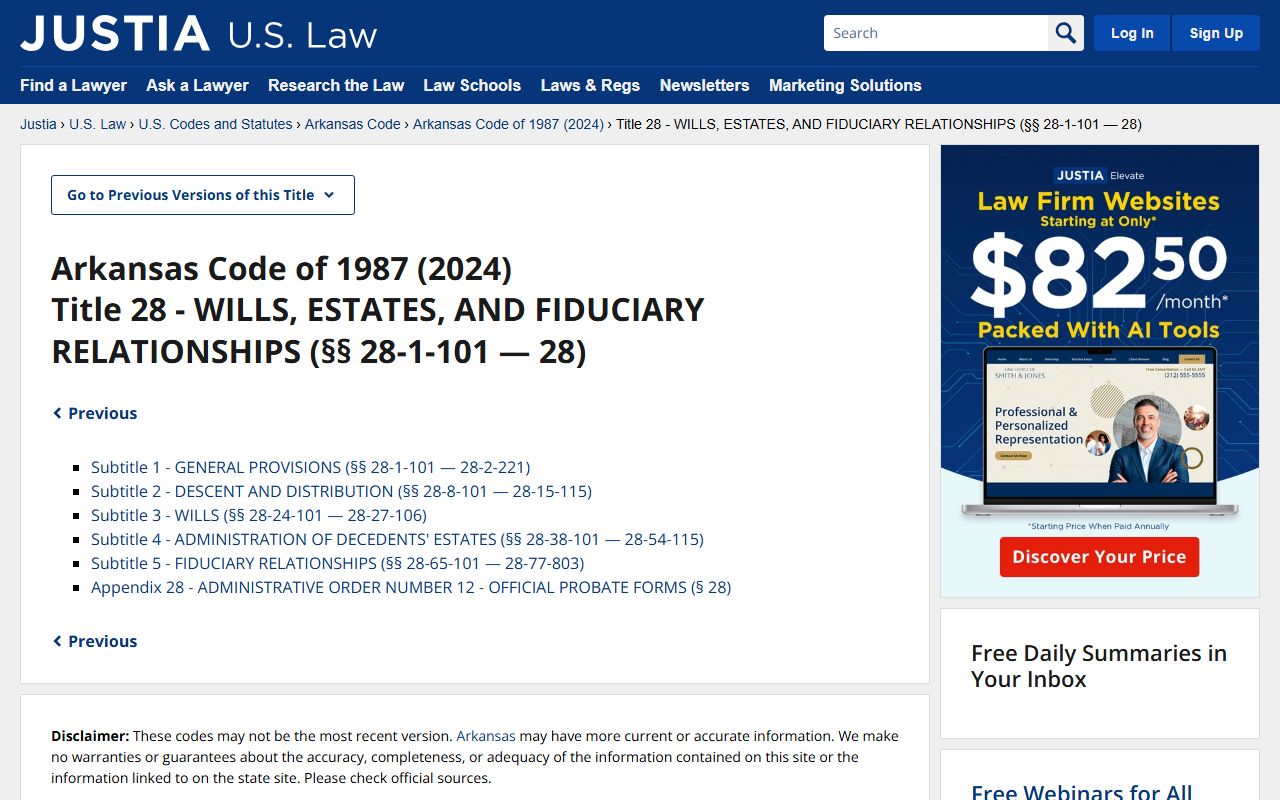
The Justia index lets you jump to each subtitle and section. It is a good place to start if you want to read the law that drives a case.
Key probate statutes include § 28-40-103 on the five-year deadline to file a will for probate, § 28-48-201 on appraisal of estate assets, § 28-50-201 on the order of payment of claims, and § 28-53-101 on the heirship petition that fixes who inherits when a case is intestate. Administrative Order No. 19, issued by the Arkansas Supreme Court, lays out what is public and what is confidential in any court file. You can read the order at arcourts.gov.
How to Request Probate Records in Arkansas
There are three main ways to get Arkansas Probate Court Records. Each works. Pick the one that fits your need.
In person: drive to the courthouse in the county where the case was filed. Go to the County Clerk or Circuit Clerk office. Give staff the case name, case number, or decedent name. Staff will pull the file and make copies while you wait. Plain copies can be handed to you in a few minutes. Certified copies may take longer because the clerk adds the seal and signs the page.
By mail: send a written request with the case info and a check. Include your name, address, and a self-addressed stamped envelope. The clerk will mail back the copies. Some counties ask you to call first so they can quote you an exact total.
Online: use CourtConnect for free case search. A few counties offer document images through their own clerk portal. The main portal does not hold every page of every file, so for the full case you will still need the clerk office.
An example of the Arkansas Courts jury and case portal is below. The same session can also link into probate case data.
The portal lets you jump between case search, jury service, and judicial contact pages. It is a shared front door for many court services in Arkansas.
Arkansas State Archives for Old Probate Records
The Arkansas State Archives in Little Rock keeps old probate papers from across the state. Staff can help with estate files that are too old for the clerk's active index. The archives hold wills, bonds, letters, and other probate items filed before the modern digital era.
You can visit the search room at 1 Capitol Mall in Little Rock, or start online at arkansasheritage.com. A snapshot of the State Archives home page is below.
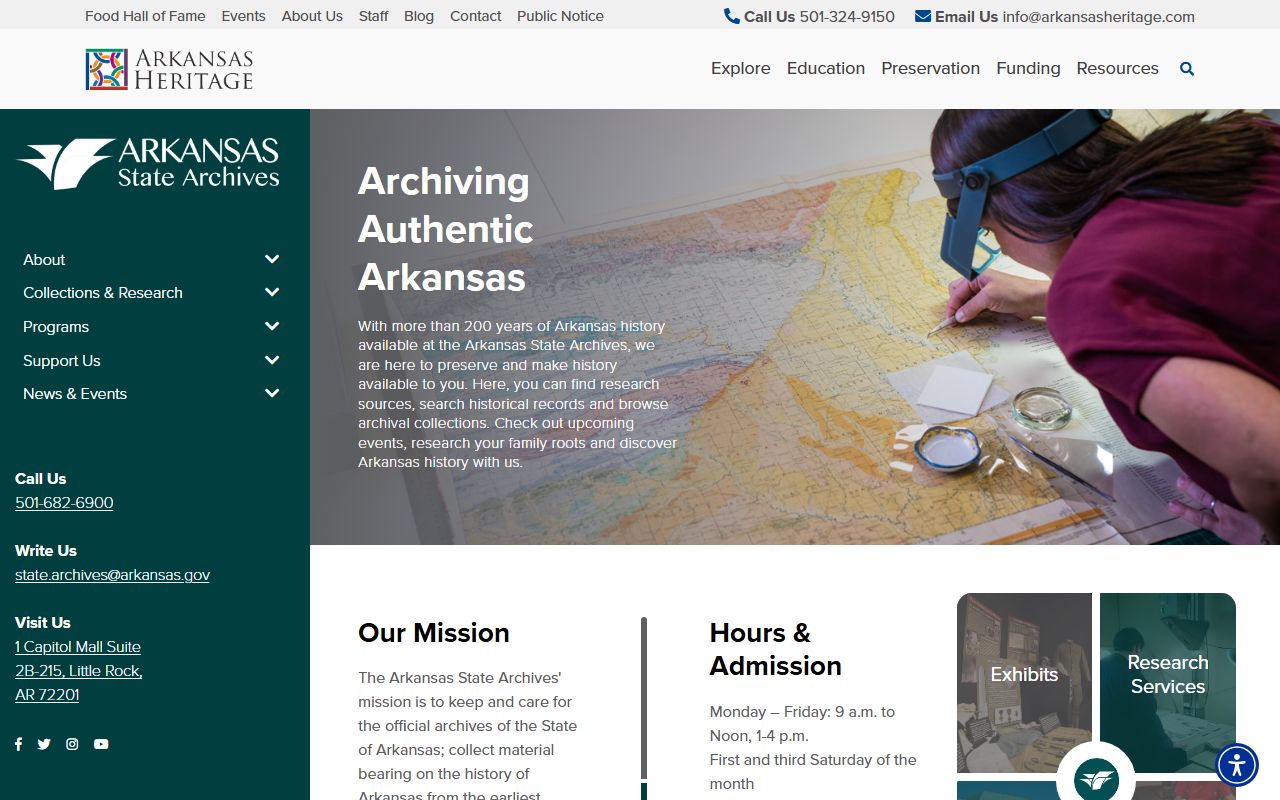
From the archives site you can find guides to county records, family papers, and microfilm finding aids that point you to probate files from the 1800s and early 1900s.
FamilySearch also has digitized probate records from many Arkansas counties, often dating back to county formation. Visit familysearch.org and look up the county by name to see the collections online.
Public Access to Arkansas Probate Court Records
Yes. Probate case files in Arkansas are public under Administrative Order No. 19 and the Arkansas Freedom of Information Act. You do not have to give a reason. You do not have to be an heir. Walk in, ask for the file, and the clerk will bring it out.
A few kinds of material are not on the public side. Social security numbers, bank account numbers, minor children's full names, and medical reports may be redacted or held back. Adoption files are sealed. If the court has sealed a full file, you may need a court order to view it. But the bulk of the file, including the petition, the will, the inventory, the claims, and the final accounting, is open to anyone who asks.
Most Arkansas Probate Court Records are open under the state public access rules, but some items in a file are redacted or sealed to protect minors and private data.
Legal Help for Arkansas Probate Cases
Probate can be hard to handle on your own, even for a small estate. Arkansas has free and low-cost legal help. Legal Aid of Arkansas serves much of the state at arlegalaid.org. The Center for Arkansas Legal Services covers the central counties and can be reached by phone or through their website.
You can also use the Arkansas Bar Association lawyer referral service to find a probate attorney. Many attorneys offer a free first call. Fees for full representation often run on an hourly rate, though some take small estates on a flat fee. Ask for a written fee agreement before you sign.
Browse Arkansas Probate Court Records by County
Every Arkansas county has its own probate court and its own set of files. Pick a county below to find local contact info, office hours, and search tools for that area.
Major Arkansas Cities with Probate Court Records
City residents file probate cases at the Circuit Court in their county. Pick a city below to learn where to go for probate records in that area.